
29 April 2024
How to clean cooker hood extractor fan: the ultimate step-by-step guide

Table of Contents
- Understanding your cooker hood extractor fan
- Extraction technology
- Ducted extractors
- Recirculating extractors
- Air filtration
- Metal/grease filters
- Carbon filters
- Why should I clean my cooker hood extractor fan?
- Signs your cooker hood extractor fan needs cleaning
- Step-by-step cleaning guide
- Gather the necessary supplies
- Safety precautions
- A step-by-step method for cleaning the exterior surfaces
- Removing grease and grime from baffle filters
- Replacing recirculating hood filters
- How often should I clean my cooker hood extractor filter?
- Troubleshooting common issues
- Conclusion
- Frequently asked questions
Maintaining a clean cooker hood extractor fan is crucial for preserving the air quality in your kitchen and preventing the build-up of grease and odours too. One of the key ways to do this is to regularly clean, maintain and/or replace your cooker hood’s filters.
You can purchase new replacement Faber cooker hood filters directly from kitchenextras.co.uk.
In this article, we will guide you through an easy step-by-step journey to help keep your kitchen smelling fresh and your extractor fan in top-notch condition. We will cover all aspects of cleaning your cooker hood extractor and also do a deep dive into the maintenance and replacement of your cooker hood filters.
Not only this, we will share our top tips to give the exterior of your cooker hood that brand new sparkling finish. Let’s go!
Understanding your cooker hood extractor fan
Your cooker hood extractor fan is designed to remove smoke, odours, grease, and steam from the kitchen. According to the Journal of Exposure Science & Environmental Epidemiology, “Cooking is a substantial contributor to air pollutant exposures in many residences.” An extractor fan improves the air quality of not just your kitchen but your entire home.
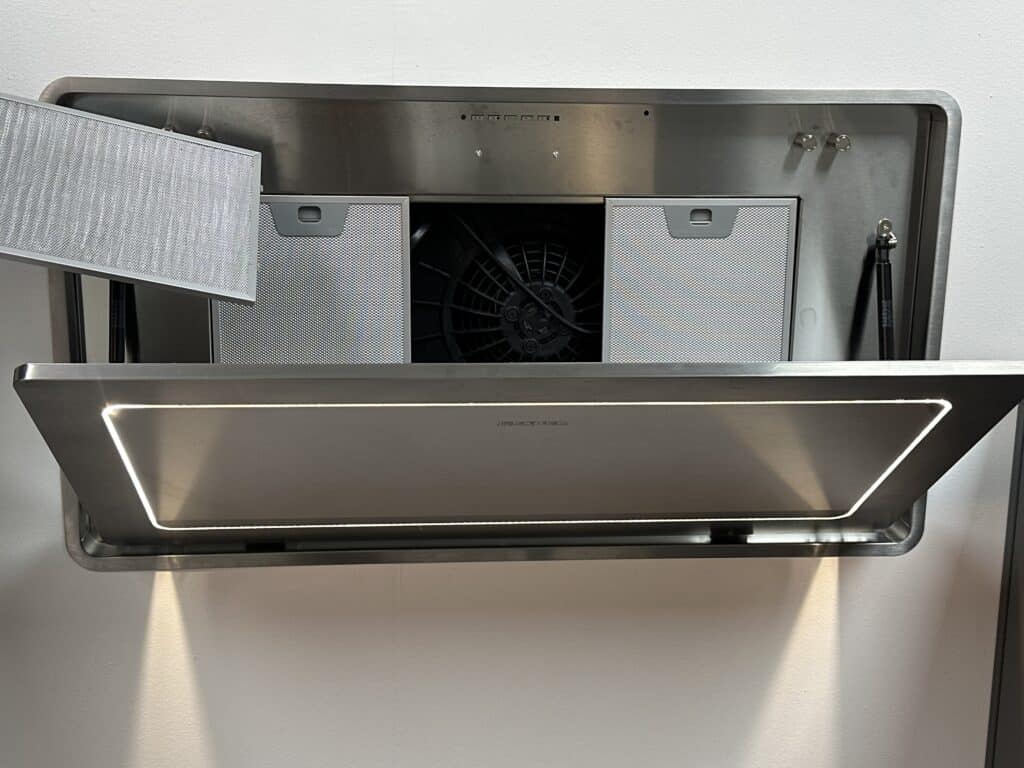
By removing excess moisture and grease particles from the air, your cooker hood extractor also helps to effectively protect your kitchen cabinetry, reducing the need to clean your cupboard exteriors and prolonging the life of your kitchen for many years.
Before your start cleaning the extractor fan though, it is important to understand two things: the type of extraction technology and the type of filters you have installed within your extraction hood.
Extraction technology
Broadly speaking, we can divide extraction technology into two different types: ducted and recirculating.
Ducted extractors
A ducted extractor is a type of cooker hood extractor fan that expels air from the kitchen to the outside environment through a duct system.
These extractors capture airborne grease, smoke, odours, and steam produced during cooking and then channel them outside the building, effectively removing them from the kitchen area.
This type of extractors is typically more powerful and efficient compared to recirculating extractors, as they eliminate pollutants rather than just filtering and recirculating the air within the kitchen.
Recirculating extractors
A recirculating extractor is a type of cooker hood extractor fan that filters the air and recirculates it back into the kitchen. Unlike ducted extractors, the air is not expelled outside. Instead, these extractors use activated carbon filters to attract and trap odours, pollutants, and gases from the air, ensuring cleaner and fresher air without harsh chemicals or strong smells.
Air filtration
Now let’s take a look at the types of filters that are available within cooker hood extractors.
Metal/grease filters

Easily removable, these filters are commonly found in vented extractors and are fantastic at trapping grease particles that are released from cooking. Read on to learn how to clean these filters with minimum fuss!
Carbon filters

Recirculating extractors typically contain carbon and grease filters, which trap grease, smoke, odours, and other airborne particles as the air passes through. Once filtered, the clean air is released back into the kitchen.
Although most carbon filters must be replaced when saturated, there are certain types of carbon filters that can be “recharged” at home by heating them in an oven. The high oven heat releases the trapped pollutants from the pores of the activated carbon. The contaminants evaporate or decompose, leaving the activated carbon ready to adsorb new pollutants.
Not that you know a bit more about extraction technology and air filtration systems, make a note of the type of technology and system that is present within your cooker hood. This will help you decide the best way to clean your cooker hood extractor effectively.
Why should I clean my cooker hood extractor fan?
According to research by the British Medical Journal (BMJ), cooking food on different types of hobs may give rise to “potentially toxic concentrations” of a numbers of harmful particles. Regularly cleaning your cooker hood extractor improves the overall air quality of your home and extends the lifespan of your appliance.
By reducing grease build up, you also reduce the risk of fire hazards, contributing to a safer cooking environment.
What’s more, a sparkling clean extractor looks beautiful too, making your hob truly become the star of your kitchen.
Now let’s look at some of the signs that show that your cooker hood extractor fan needs a clean.
Signs your cooker hood extractor fan needs cleaning
If you have neglected the cleaning and maintenance of your cooker hood for an extended period of time, here are some of the signs you need to look out for that will let you know that it’s time to put on those rubber gloves and sort it out!
| Filter Alarm | Some extractors, such as our advanced technology filter hoods, have a built-in filter saturation alarm that warns you when it is time to clean the anti-grease filter or substitute the anti-odour filter. |
| Reduced Airflow | If you notice a decrease in the effectiveness of the extractor fan in removing smoke, steam, or odours from the kitchen, it may indicate a need for cleaning. |
| Visible Grease Buildup | Accumulation of grease on the exterior surfaces of the hood or around the fan blades is a clear indicator that cleaning is necessary. |
| Lingering Odours | Persistent cooking odours lingering in the kitchen despite the operation of the extractor fan suggest that the filters may be saturated with grease and require cleaning or replacement. |
| Excessive Noise | Unusual or loud noises coming from the extractor fan during operation can be a sign of obstruction or buildup, indicating the need for cleaning to restore proper functioning. |
| Visible Dust or Debris | If you notice dust or debris collecting on the fan blades or inside the hood, it’s a sign that the extractor fan is not effectively capturing airborne particles and requires cleaning. |
| Smoke or Steam Backup | Smoke or steam backing up into the kitchen instead of being effectively vented outside suggests that the extractor fan may be clogged or obstructed and in need of cleaning. |
Step-by-step cleaning guide
Now let’s look at a simple way in which you can quickly and easily stay on top of cleaning and maintaining your cooker hood extractor fan.
Gather the necessary supplies
It’s crucial to gather all your cleaning supplies before starting to clean your cooker hood. This will help avoid any last-minute scrambling to locate necessary items, ensuring a smooth and efficient cleaning process.
For a routine clean, we recommend the following supplies:
• Dish soap
• Soda crystals or baking soda
• Microfiber cloth
• Rubber gloves
• Sponge
• Scrubbing brush
For stubborn water stains, we love using a melamine sponge and warm water.
You might already be using most or all the above supplies regularly in your kitchen. However, it is still important to ensure that you follow some basic safety precautions when attempting to clean your cooker hood extractor fan. We look at some of these below.
Safety precautions
For a routine clean, we recommend the following safety precautions:
• Turn off the extractor fan at the mains before beginning the cleaning process to prevent any electrical hazard.
• Wear rubber gloves to protect your hands from chemicals and grease.
• Handle any cleaning solutions with care to avoid skin irritation or accidents.
• Use caution when handling hot water or steam to prevent burns.
• Ensure proper ventilation in the kitchen area while cleaning to avoid inhaling fumes from the cleaning products.
A step-by-step method for cleaning the exterior surfaces
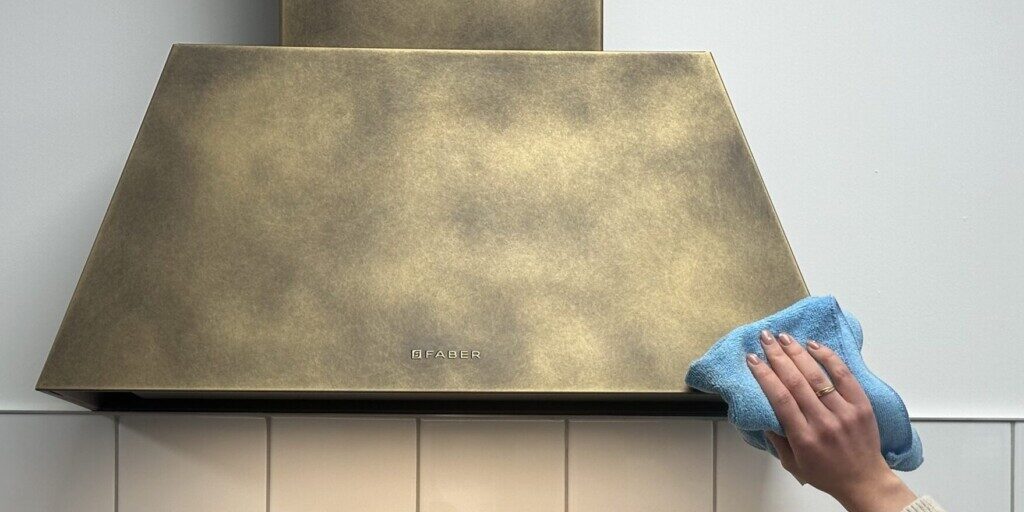
- To clean the exterior surfaces of the cooker hood, begin by creating a paste. Mix soda crystals or baking soda with tap water in a little bowl. This paste will effectively remove grease marks and stains from the exterior surfaces of the hood.
- Apply this paste evenly onto the affected areas of the hood using a sponge or cloth and let it sit for a few minutes. This will allow it to penetrate and loosen any dirt build-up.
- Now wipe the surfaces with a clean damp cloth or sponge, rinsing thoroughly with water to remove any residue.
- Dry and buff the surface with a clean microfibre cloth. If the hood is stainless steel, you can also use a stainless-steel polish at this last stage. This will leave your cooker hood looking shiny and grease-free.

Removing grease and grime from baffle filters
Here is a step-by-step method to remove stubborn grease and grime from your cooker hood filters:
- Wash all metal or sponge filters with soapy water. You can easily wash metal filters in the dishwasher too.
- For a deeper clean, fill a wide shallow tray with warm soapy water and soak the filters. Sprinkle on some soda crystals or baking soda for a deeper clean.
- Follow this up by using a scrubbing brush to help break down stubborn grease build-up.
- Finally, rinse the filters with tap water and allow them to air dry before replacing them.
Replacing recirculating hood filters
If your cooker hood is not vented and recirculates the air, you will need to replace the internal carbon and grease filters.
Every cooker hood comes with its own design of replacement filters. However the principles of replacing them remain pretty much the same. Let’s take a look at a modern induction venting hob with a recirculating carbon filter and how to replace it.
Step 1

Switch off the hob using the power touch button. Ensure that the hob has cooled down to room temperature.
Step 2
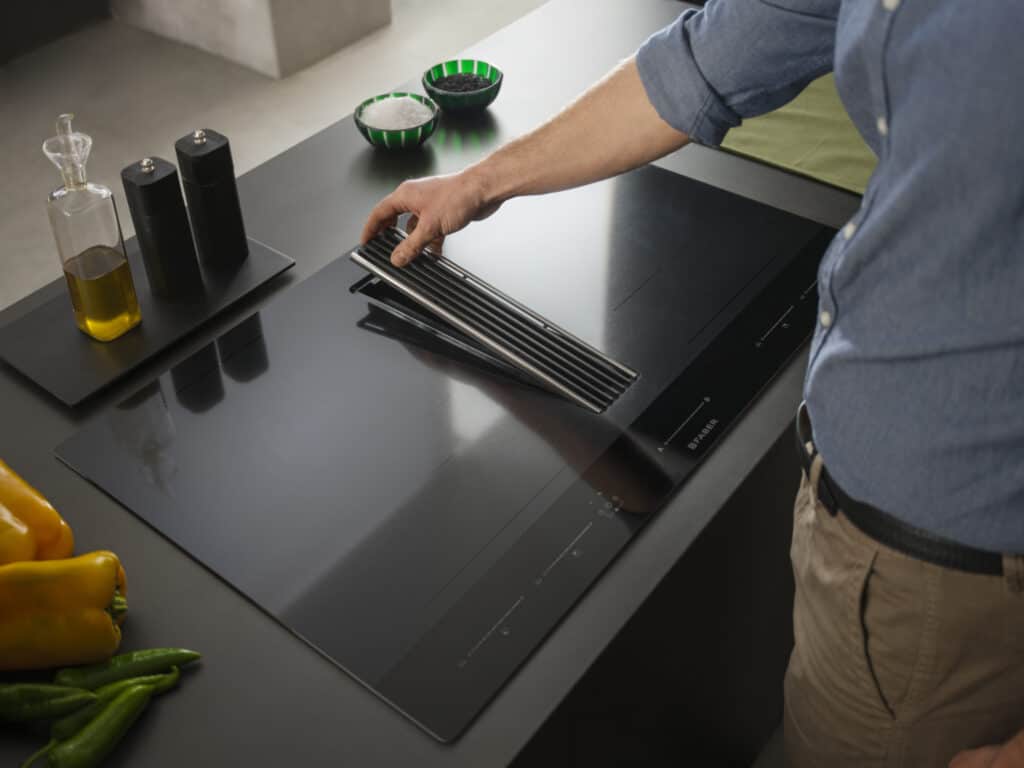
Lift the protective grill and keep it to one side.
Step 3


Lift out the metal grease filter and wash it with warm soapy water. Alternatively, run it through the dishwasher on a hot wash. Let it air dry completely.
Step 4
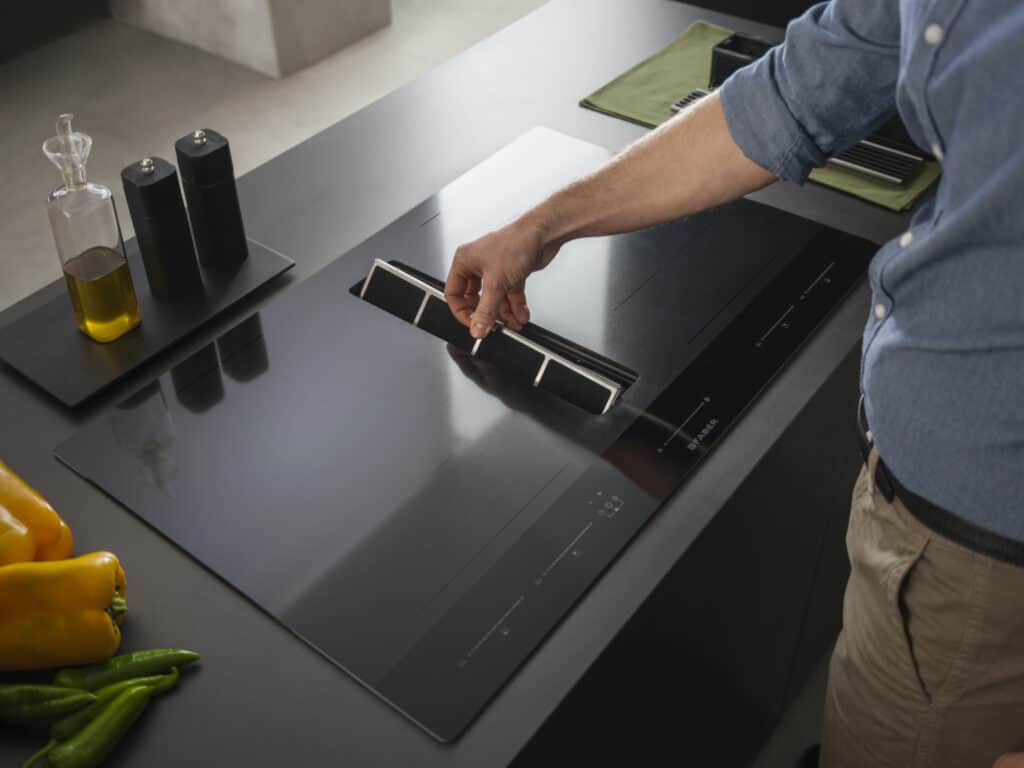
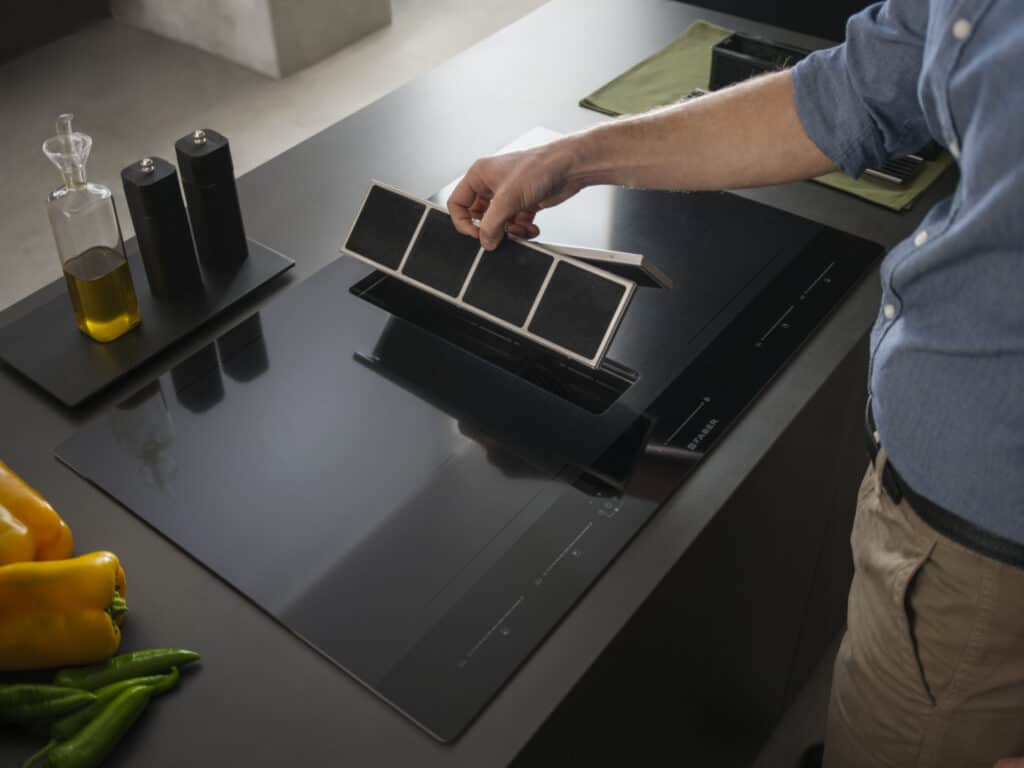
Slide out the carbon filter.
Step 5
Follow manufacturer instructions on whether to replace or reactivate the carbon filter.
Step 6
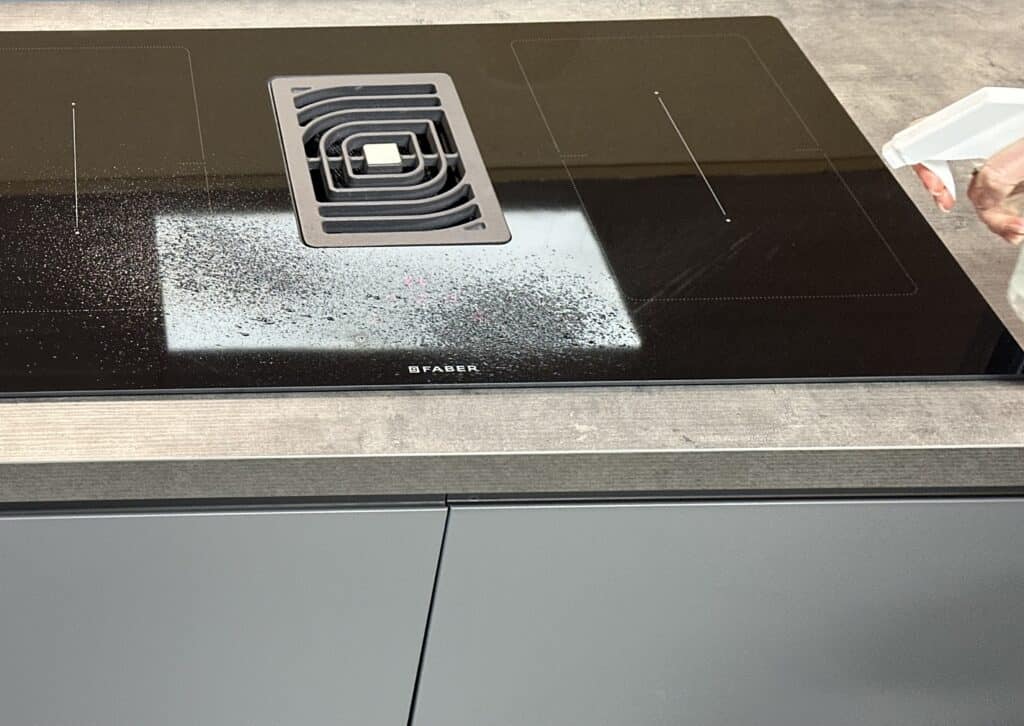
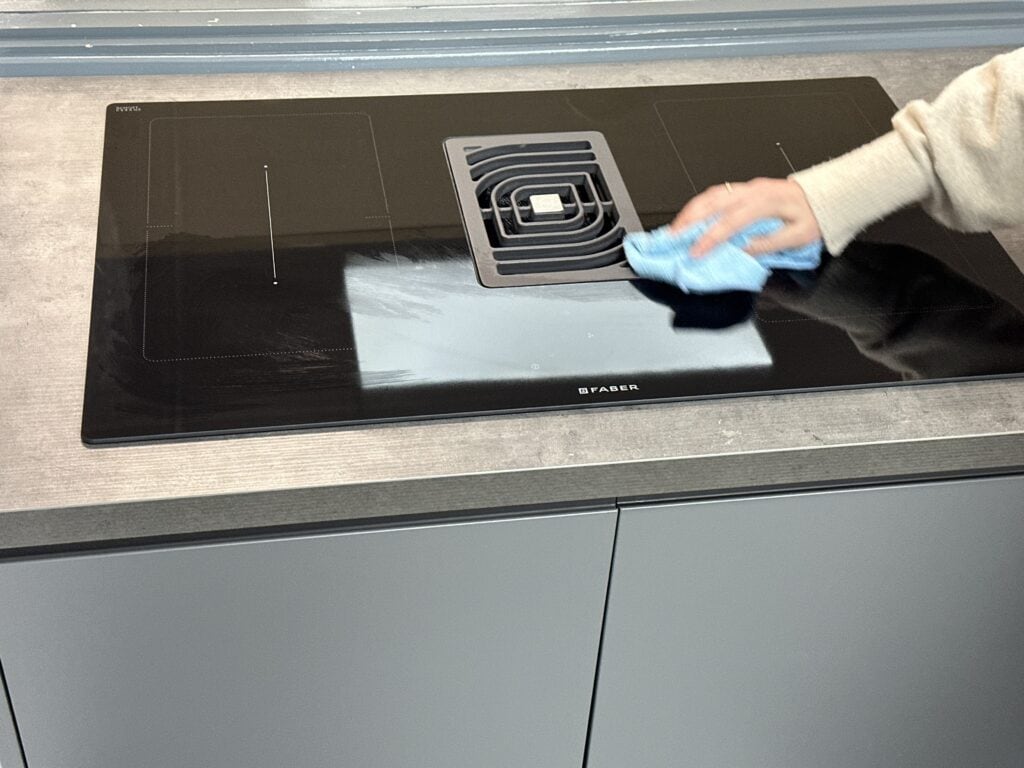
Lightly spray the glass surface with water or glass cleaner. Wipe down with a microfibre cloth.
Step 7
Return all the removed components to their original places. Your recirculating hood is fresh and clean!
How often should I clean my cooker hood extractor filter?
Expert advice
We have been in the cooker hood business for well over 15 years. And as the sole official UK supplier of Faber — a trailblazer in cooker extractor hood technology with over 60 years of history — you can safely say that we know a thing or two about cleaning and maintaining cooker hoods!

Our experience has taught us that wiping down the hood every week, and regularly maintaining and/or replacing the filters makes for a clean and efficient range hood extractor.
You can purchase new replacement Faber cooker hood filters directly from kitchenextras.co.uk.
Cooker hood filter maintenance schedule
The duration of time in between filter cleaning and replacement can vary between different types of filters. So here we have a quick summary of the different types of filters that we offer and how often they need to be maintained.
| Type of filter | Schedule |
| Aluminium | Wash in the dishwasher every 2 months |
| Long lasting active carbon filter | Wash in the dishwasher every 3 – 4 months. Replace after 3 years. |
| High performance carbon filter | Replace every 6 months |
You should also clean the inside of the hood once a year to prolong the life of your cooker hood.
This simple cleaning schedule will prevent the build-up of grease and debris while keeping your home environment fresh and comfortable. It will also prolong the life of your appliance and keep it looking beautiful and shiny.
Troubleshooting common issues
While cleaning your cooker hood extractor is typically straightforward, occasional issues may arise, causing frustration. To assist you in addressing these situations, we have compiled a helpful table below.
| Problem | What to do about it |
| Stubborn grease build-up | Use a thick paste of baking soda and warm water. Apply it on using a wide brush or sponge. Leave it for a good 15 – 20 minutes before scrubbing it off. For filters, soak in hot, soapy water with a good dash of baking soda. Alternatively, run your metal filters through the hottest setting on your dishwasher. |
| Filter damage | Handle filters with care during cleaning to prevent damage. Inspect filters regularly for signs of wear and tear, and replace them if necessary to maintain optimal performance. |
| Lingering odours or ineffective ventilation | Ask yourself if you are you using your cooker hood extractor effectively. Typically, we recommend switching on the extractor fan a good 1 minute before you start cooking, to establish a good outflow of air. Match the setting on the fan with the amount and intensity of your cooking. Continue to run the extractor fan for 5 minutes after you finish cooking to get rid of all lingering odours and fumes. If this does not improve things, it might be time to deep clean the interior of your appliance, including the fan blades and ducting. We recommend hiring the services of a qualified technician to do this for you. For recirculating hoods, consider replacing the carbon and grease filters to effectively remove persistent odours. |
| Access issues | Use a stepping stool or small step-ladders to safely access all the necessary parts of your cooker hood extractor. We recommend keeping a small folding step within easy access in your kitchen. |
| Noise or vibration | Sometimes excessive noise or vibration can be resolved simply by slightly nudging the chimney breast plates to one side or the other. If the noise is coming from deep within the appliance however, it may be a case of a faulty fan or damaged fan blades. We recommend hiring the services of a qualified technician to resolve this for you. |
Conclusion
Cleaning your cooker hood extractor fan is a straightforward process once you are familiar with the process and are aware of your appliance’s extraction and air filtration technologies.
According to research published by the National Centre for Biotechnology Information (NCBI): “Indoor sources of air pollution worsen indoor and outdoor air quality.” However, this can be mitigated by using proper air filtration.
Having a well-maintained and efficient extractor will not only improve the air quality indoors but outdoors as well. And with regular upkeep, you can maintain a cleaner kitchen with less build-up of grease and a much higher aesthetic value.
For information on the specific technology used in your cooker hood, you can visit the manufacturer’s website. And for hoods purchased through an approved UK Faber retailer, you can always email us for guidance.
Additionally, you can find helpful instructional videos on our YouTube channel, covering various aspects of cooker hoods’ maintenance. Remember, a clean cooker hood extractor means less cleaning and ultimately, more time to relax and enjoy a fresher home.
Frequently asked questions
How do you clean a greasy extractor fan hood?
To clean a greasy extractor fan hood, make a paste of soda crystals or baking soda with tap water in a little bowl. Apply this paste evenly onto the affected areas of the hood using a sponge or cloth and let it sit for a few minutes.
Now wipe the surfaces with a clean damp cloth or sponge, rinsing thoroughly with water to remove any residue. Dry and buff the surface with a clean microfibre cloth.
However for stainless steel hoods, simply use warm soapy water to scrub and clean. Finish off with stainless-steel polish to leave your cooker hood looking shiny and grease-free.
How do you clean a metal mesh cooker hood filter?
To clean a metal mesh cooker hood filter, wash it with warm with soapy water. You can also place it in the dishwasher.
For a deeper clean, fill a wide shallow tray with warm soapy water and soak the filter. Sprinkle on some soda crystals or baking soda for a deeper clean. You can follow this up by using a scrubbing brush to help break down stubborn grease buildup.
Finally, rinse the metal mesh grease filters with tap water and allow them to air dry before replacing them.
How often do you need to clean an extractor fan?
You should clean the exterior of your extractor fan at least once a week. Wash the metal mesh filters of your extractor fan every 2 months. For recirculating extractor fans, refer to the manufacturer’s recommendation for the specific filter.
Can extractor fans get blocked?
Yes, extractor fans – particularly the filters within –can get blocked if they are not cleaned/replaced and maintained regularly.
What is the best degreaser for kitchen extractor fan?
The best degreaser for a kitchen extractor fan is simple hot soapy water. For a deeper clean, a mixture of baking soda with water makes for an excellent cleaning paste.